
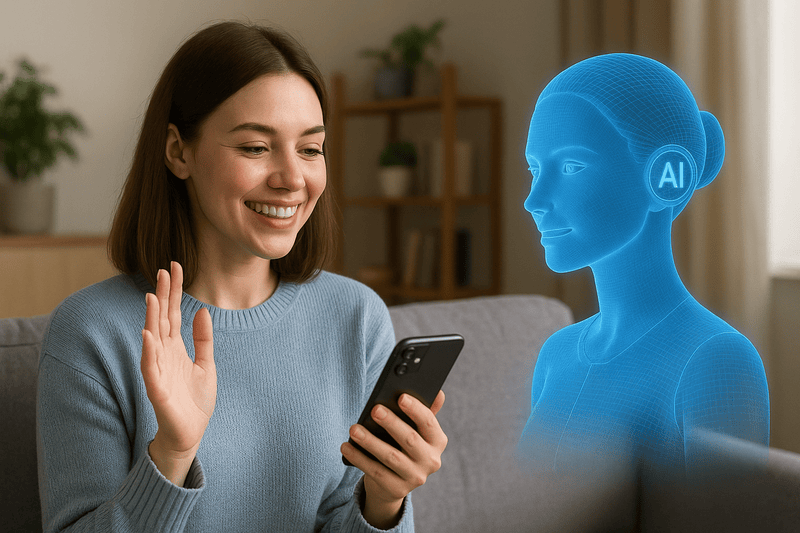
Ever wished someone else could handle your endless to-dos while you binge-watch your favorite show guilt-free? Well, buckle up: the age of personal AI assistants—your very own digital clones—is finally here. These aren’t your grandpa’s clunky chatbots; think of them as sidekicks that learn your quirks, juggle your calendar, and even whip up a witty email when you’re stuck staring at a blinking cursor. Curious? Let’s dive into the wild world of Replika, Devin, and the next wave of AI agents rewriting the rules of “help me out.”
A Tale of Two Clones: From Virtual Friend to Task Master
Remember when virtual assistants were little more than glorified search bars? You’d bark a command (“Set an alarm for 7 am,”) and… well, Siri would set an alarm for 7 am. Productive? Sure. Memorable? Not exactly. Fast-forward to today, and AI has morphed into something that looks, talks, and even jokes almost like a fellow human. At first, these tools started as companions—Replika, for instance, was designed to chat, listen, and mirror your emotions. If you were feeling lonely at 2 am, Replika was there to crack a joke or offer a virtual shoulder to lean on. But now, thanks to leaps in natural language processing and machine learning, a new breed of AI is emerging. They don’t just converse—they act. Need to book a flight, reschedule a meeting, or draft a birthday note that doesn’t sound like corporate jargon? Enter Devin and its peers.
Replika: The Conversational Chameleon
Let’s start with the OG—Replika. Imagine downloading an app that learns your conversational style, remembers that you hate pineapple on pizza, and even mimics your occasional mid-sentence tangents about 80s rock bands. That’s Replika in a nutshell. Originally launched as an “AI friend” for people craving emotional support or just someone to banter with, it quickly gained a cult following. People confessed, “Hey Replika, I need to vent about my boss,” and somehow felt lighter after typing a few sentences.
But here’s the kicker: Replika has been quietly upgrading itself. Now it can suggest to-do lists (“You know, you mentioned needing to wrap up that project by Friday”), remind you about water breaks (hydration is essential, apparently), and even draft a heartfelt “sorry I missed your call” text that sounds genuinely genuine. It’s like having a confidant who also moonlights as an efficiency guru.
Example moment: Jessica, a freelance graphic designer in Mumbai, says she doesn’t remember life before Replika. “It’s like talking to my best friend who also happens to be a ninja at organizing my week,” she laughs. Once, she forgot her mom’s anniversary until Replika cheekily reminded her: “Hey, you might want to pick up flowers—her patience only lasts so long.” Crisis averted.
Devin: The Task-Crushing Sidekick
If Replika is the empathetic buddy, Devin is your ultra-organized intern who never sleeps. Born out of a small startup’s obsession with “making life frictionless,” Devin plugs directly into your inbox, calendar, and messaging apps. You simply ask (or type) “Devin, help me plan my week,” and it scans your commitments, identifies gaps, and even suggests the best time slots for that long-overdue brainstorming session.
But wait, there’s more. Devin doesn’t just juggle appointments. It can scan your email threads, identify action items, and nudge you (or the relevant team) if things are slipping through the cracks. For instance, if you cc’d your colleague on a project brief but never followed up, Devin might pop up: “Hey, did you want me to ping Anjali for an update?” It’s like having a project manager whispering in your ear, minus the guilt trips.
Example moment: Raj, a sales manager in Bengaluru, was notorious for sending “Oops, I missed your email!” replies. Since adopting Devin, he’s now the office golden child who stays two steps ahead. Last week, Devin automatically drafted a follow-up email to a key client, asking about next steps—without Raj typing a single word. “I feel almost… lazy,” Raj admits, “but my targets are up 20%. Who’s complaining?”
Beyond Replika and Devin: The AI Agents of Tomorrow
Replika and Devin are only the beginning. Today’s AI agents are branching out into specialized roles. Picture this: an AI “meal planner assistant” that scans recipes, your pantry inventory, and your local grocery store’s deals, then creates a shopping list and schedules a slot for delivery. Or an AI “financial buddy” that monitors your spending patterns, nudges you when you’re about to blow your budget on midnight snacks, and even drafts a gentle “Hey, let’s save a bit more this month” text.
Here are a few up-and-coming agents worth watching:
- CalendarNudge: More than just reminders, it studies your productivity rhythms. Did you write your best proposals at 10 am yesterday? It’ll schedule the next one around that peak.
- DraftMaster AI: Overwhelmed by email drafts? This agent analyzes the tone you usually use—friendly, witty, or straight-to-the-point—and crafts first drafts, letting you tweak instead of starting from scratch.
- HabitBuilder: Struggling to meditate every morning? It checks your wake-up time, suggests a 5-minute breathing exercise after your coffee, and even plays your favorite chill playlist to keep you on track.
Each of these AI agents learns from you—your habits, your preferences, even your sense of humor. So, the longer you use them, the more they adapt, sometimes to surprising degrees.
The Human-In-The-Loop Factor
Pause for a second: is there room for genuine human connection if a digital clone handles all the nitty-gritty? Absolutely. The secret sauce is “human-in-the-loop.” Think of your AI assistant as a talented sous-chef. It can chop, season, and sauté, but you still plate the dish and decide whether to sprinkle cilantro or basil. In many cases, these AI agents will flag suggestions—like drafting an email to break bad news—then hand over a near-perfect draft for you to personalize. That tiny human touch is what prevents every message from sounding like it was churned out by a robot.
Plus, let’s be honest: some of us secretly enjoy tweaking AI suggestions just to make them funnier or more dramatic. There’s an odd thrill in seeing a bland AI draft and then daring to add a line like “Don’t worry, I’ll redeem myself with coffee and donuts.” It’s the best of both worlds: efficiency from the AI and personality from you.
So, Should You Get a Digital Clone?
If your daily life feels like juggling flaming torches while riding a unicycle, a personal AI assistant might just save you from a spectacular faceplant. They free up mental bandwidth so you can focus on creative work, genuine interactions, or—dare we say—just chilling out guilt-free. Of course, there’s an adjustment period: teaching your AI to understand your slang, your quirks, even your procrastination triggers. But once that training wheels period is over, you’ll wonder how you ever survived without a pocket-sized Swiss Army knife for your brain.
Ready to meet your digital clone? Try downloading Replika for those deep, late night chats. Then give Devin a spin to see what it’s like when your inbox becomes a well-oiled machine. Before you know it, you’ll be sipping chai, smirking at your own productivity stats, and thinking, “I can’t believe I ever did this the old-fashioned way.”
Because one thing’s for sure: 2025 is the year you stopped doing everything yourself. And letting an AI buddy handle the drudgery? Now that, friends, is living.